

Is 2 Hour Methanol Gel eco - friendly?
As a supplier of 2 Hour Methanol Gel, I've often been asked about its eco - friendliness. In this blog, I'll delve into the various aspects of 2 Hour Methanol Gel to determine whether it can be considered an environmentally friendly fuel option.
Understanding 2 Hour Methanol Gel
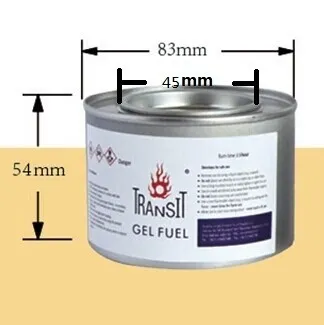
2 Hour Methanol Gel is a type of Methanol Chafing Fuel that is designed to burn for approximately two hours. It is commonly used in chafing dishes to keep food warm at events such as parties, buffets, and catering services. The gel form makes it easier to handle and store compared to liquid fuels, and it also provides a more stable and consistent flame.

The Composition of 2 Hour Methanol Gel
Methanol, the main component of 2 Hour Methanol Gel, is a simple alcohol. It is a colorless, volatile, and flammable liquid. When it is turned into a gel, additives are used to thicken the liquid and make it more viscous. These additives are usually non - toxic and designed to enhance the performance of the fuel.
Advantages in Terms of Environmental Impact
Clean Burning
One of the most significant advantages of 2 Hour Methanol Gel is its clean - burning nature. When methanol burns, it produces carbon dioxide and water vapor as the main by - products. Unlike some other fossil - based fuels, it does not produce large amounts of particulate matter, sulfur dioxide, or nitrogen oxides. These pollutants are known to contribute to air pollution, smog, and acid rain. In comparison to traditional charcoal or wood - based fuels, 2 Hour Methanol Gel is a much cleaner option, especially in enclosed or semi - enclosed spaces.
Reduced Deforestation
Since 2 Hour Methanol Gel does not rely on wood or charcoal, its use helps to reduce deforestation. Deforestation is a major environmental issue as it leads to the loss of habitat for countless plant and animal species, soil erosion, and a decrease in the Earth's ability to absorb carbon dioxide. By choosing 2 Hour Methanol Gel over wood - based fuels, we can contribute to the preservation of forests and the biodiversity they support.
Energy Efficiency
2 Hour Methanol Gel is designed to burn for a specific period, which means it provides a consistent and predictable amount of heat. This energy efficiency is beneficial as it reduces waste. Users can plan their events more accurately, knowing exactly how long the fuel will last and how much heat it will generate. In contrast, some other fuels may burn unevenly or require more frequent refueling, leading to wasted energy.
Potential Concerns
Methanol Production
The production of methanol can have environmental impacts. Methanol is typically produced from natural gas or coal through a process called steam reforming. If the production process is not optimized, it can result in the release of greenhouse gases. However, there are also emerging technologies that aim to produce methanol from renewable sources such as biomass or carbon dioxide capture and utilization. As these technologies become more widespread, the environmental footprint of methanol production could be significantly reduced.
Toxicity
Methanol is toxic if ingested or inhaled in large quantities. While the gel form of methanol reduces the risk of accidental spills and splashes, there is still a potential risk if the fuel is mishandled. If not disposed of properly, methanol can contaminate soil and water sources. It is crucial for users to follow proper safety and disposal guidelines to minimize these risks.
Competition with Food Crops
In some cases, methanol can be produced from crops such as corn or sugarcane. If large - scale methanol production competes with food production for land, water, and other resources, it could have a negative impact on food security. However, as mentioned earlier, the development of non - food - based methanol production methods can help to mitigate this issue.
Comparing with Other Alternatives
Against Traditional Fuels
Compared to traditional fuels like diesel, gasoline, or coal, 2 Hour Methanol Gel has a much lower environmental impact. These traditional fuels are derived from fossil sources, and their combustion releases large amounts of greenhouse gases and pollutants. For example, coal - fired power plants are major emitters of carbon dioxide, sulfur dioxide, and mercury. In contrast, 2 Hour Methanol Gel burns cleaner and produces fewer harmful emissions.
With Other Smokeless Solid Fuel Options
There are other smokeless solid fuel options available in the market. Some of these are made from compressed biomass or other renewable materials. While these fuels also have their own environmental benefits, 2 Hour Methanol Gel offers a unique combination of clean burning, long - lasting heat, and ease of use. It is also more suitable for certain applications, such as chafing dishes in indoor settings.
Conclusion
Overall, 2 Hour Methanol Gel has both positive and negative aspects when it comes to its environmental friendliness. On the one hand, its clean - burning nature, reduced deforestation impact, and energy efficiency make it a relatively eco - friendly option compared to many traditional fuels. On the other hand, concerns about methanol production, toxicity, and potential competition with food crops need to be addressed.
As a supplier, I am committed to promoting the responsible use of 2 Hour Methanol Gel. We provide clear safety and disposal instructions to our customers, and we are constantly exploring ways to improve the environmental performance of our products. We believe that with proper management and the development of more sustainable production methods, 2 Hour Methanol Gel can play an important role in a more environmentally friendly future.
If you are interested in learning more about 2 Hour Methanol Gel or would like to discuss potential procurement opportunities, we welcome you to reach out. We are here to answer your questions and work with you to find the best fuel solutions for your needs.
References
- "Methanol: Properties, Production, and Applications" - Chemical Industry Journal
- "Environmental Impacts of Different Fuel Types" - Environmental Science Review
- "The Future of Renewable Methanol Production" - Renewable Energy Research Report