

Does Handy Fuel Gel need to be pre - heated before use?
As a supplier of Handy Fuel Gel, one question that frequently arises from our customers is whether Handy Fuel Gel needs to be pre-heated before use. In this blog post, I'll delve into this topic, exploring the properties of Handy Fuel Gel, the potential benefits and drawbacks of pre-heating, and provide some practical advice based on scientific knowledge and our experience in the industry.
Understanding Handy Fuel Gel
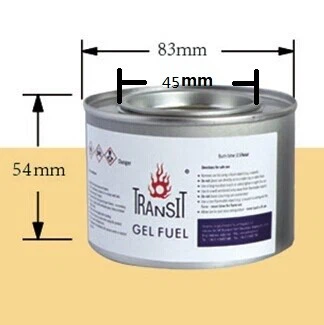
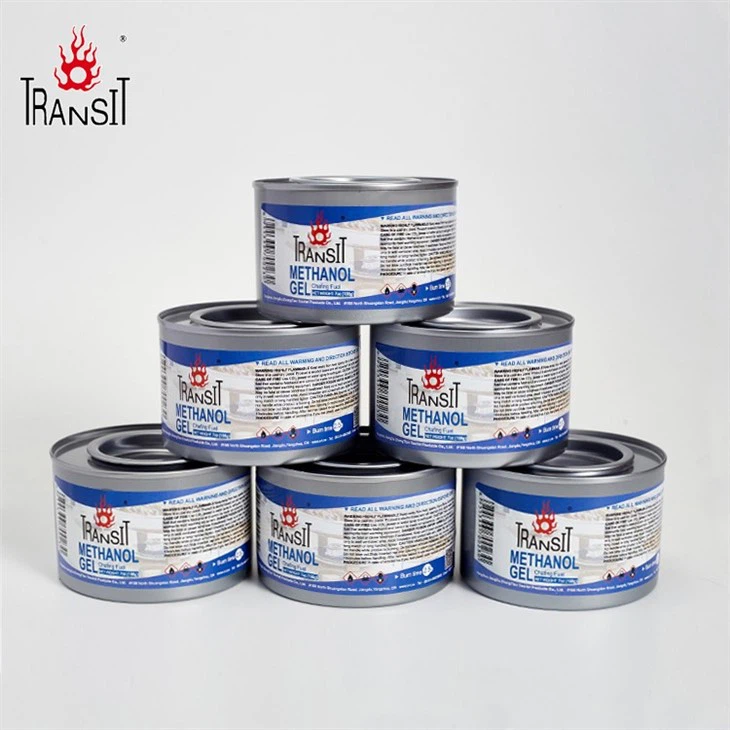
First, let's get a clear understanding of what Handy Fuel Gel is. Handy Fuel Gel, as you can learn more about on our website Handy Fuel Gel, is a type of methanol - based gel fuel. Methanol is a widely used fuel source due to its high energy density and relatively clean - burning characteristics. The gel form of the fuel makes it convenient to handle, store, and use. It is commonly used in chafing dishes, which are popular in catering events, buffets, and home dining settings to keep food warm.
The Science Behind Fuel Combustion
To understand whether pre - heating is necessary, we need to look at the basic science of fuel combustion. For a fuel to burn, it needs to reach its ignition temperature. The ignition temperature is the minimum temperature at which a fuel will start to burn in the presence of an oxidizer (usually oxygen in the air). Once the fuel reaches this temperature, a chemical reaction called combustion occurs, releasing heat, light, and various by - products.
In the case of Handy Fuel Gel, the gel structure itself acts as a sort of barrier. The fuel molecules within the gel are held together in a semi - solid matrix. When we try to ignite the gel directly, the heat from the ignition source needs to break through this matrix and raise the temperature of the fuel molecules to the ignition point.
Potential Benefits of Pre - Heating Handy Fuel Gel
Faster Ignition
Pre - heating Handy Fuel Gel can significantly reduce the time it takes for the gel to ignite. By applying some external heat to the gel before trying to light it, we can start to break down the gel structure and bring the fuel molecules closer to their ignition temperature. This means that when we apply a flame, the fuel will catch fire more quickly. For example, in a busy catering environment where time is of the essence, faster ignition can save a lot of time and increase efficiency.
More Consistent Combustion
Pre - heating can also lead to more consistent combustion. When the gel is pre - heated, the fuel molecules are more evenly distributed in terms of temperature. This results in a more uniform burning pattern once the fuel is ignited. In contrast, if the gel is ignited cold, there may be areas that are still too cold to burn properly, leading to uneven flames and potentially incomplete combustion.
Drawbacks of Pre - Heating Handy Fuel Gel
Safety Risks
One of the main drawbacks of pre - heating Handy Fuel Gel is the increased safety risk. Methanol is a flammable substance, and if pre - heating is not done properly, it can lead to accidental fires or explosions. For instance, if we use an inappropriate heating source or heat the gel in an enclosed space without proper ventilation, the methanol vapors can build up and create a dangerous situation.
Additional Equipment and Time
Pre - heating also requires additional equipment and time. We need to have a suitable heating source, such as a small heater or a hot plate. This adds to the cost and complexity of using the fuel. Moreover, the pre - heating process itself takes time, which may not be practical in some situations, especially when we need to set up the chafing dishes quickly.
Practical Advice on Pre - Heating Handy Fuel Gel
In most cases, pre - heating Handy Fuel Gel is not strictly necessary. The gel is designed to be easily ignited at room temperature with a standard ignition source, such as a long - stemmed lighter or a match. However, there are some situations where pre - heating can be beneficial:
- Cold Environments: In cold environments, the temperature of the gel is lower, and it may take longer to ignite. Pre - heating can help overcome this issue. For example, if you are using Handy Fuel Gel outdoors in winter, pre - heating can ensure reliable ignition.
- Large - Scale Events: In large - scale catering events where a large number of chafing dishes need to be set up quickly, pre - heating can improve efficiency. You can set up a pre - heating station to prepare the fuel gels in advance.
If you decide to pre - heat Handy Fuel Gel, here are some safety tips:
- Use a safe heating source, such as a low - wattage hot plate or a dedicated fuel pre - heater.
- Ensure proper ventilation to prevent the accumulation of methanol vapors.
- Do not over - heat the gel, as this can also be dangerous.
Comparison with Other Fuel Types
It's interesting to compare Handy Fuel Gel with other similar fuel types, such as Methanol Chafing Fuel and Smokeless Solid Fuel. Methanol chafing fuel is often in a liquid form. Liquids generally have a lower viscosity than gels and may reach their ignition temperature more quickly. However, they also have a higher risk of spillage. Smokeless solid fuel, on the other hand, has a different structure. It may require more heat to break down its solid structure, but once ignited, it can burn for a longer time.
Conclusion and Call to Action
In conclusion, while pre - heating Handy Fuel Gel is not always necessary, it can have some benefits in certain situations. As a supplier, we are committed to providing high - quality Handy Fuel Gel that is easy to use and safe. If you have any questions about the use of our fuel, or if you are interested in purchasing Handy Fuel Gel for your business or personal use, we encourage you to contact us for a detailed discussion. Our team of experts can provide you with more information and help you make the best decision based on your specific needs. Whether you are a caterer looking for a reliable fuel for your chafing dishes or a homeowner planning a party, Handy Fuel Gel is a great choice.
References
- Incropera, F. P., & DeWitt, D. P. (2002). Fundamentals of Heat and Mass Transfer. John Wiley & Sons.
- Turns, S. R. (2012). An Introduction to Combustion: Concepts and Applications. McGraw - Hill.