
How does 6 Hour Chafing Fuel behave in high - altitude areas?
Hey there! I'm a supplier of 6 Hour Chafing Fuel, and I've been getting a lot of questions lately about how our product behaves in high - altitude areas. So, I thought I'd write this blog to share what I've learned.
First off, let's talk about what high - altitude areas are. Generally, areas above 5,000 feet (about 1,524 meters) are considered high - altitude. At these elevations, the air pressure is lower, and the oxygen levels are also reduced compared to sea - level conditions. These two factors can have a significant impact on how our 6 Hour Chafing Fuel burns.

The Impact of Lower Air Pressure
Lower air pressure at high altitudes affects the boiling point of the fuel. You see, the boiling point of a liquid is the temperature at which its vapor pressure equals the surrounding air pressure. When the air pressure is lower, like in high - altitude areas, the boiling point of the fuel decreases.
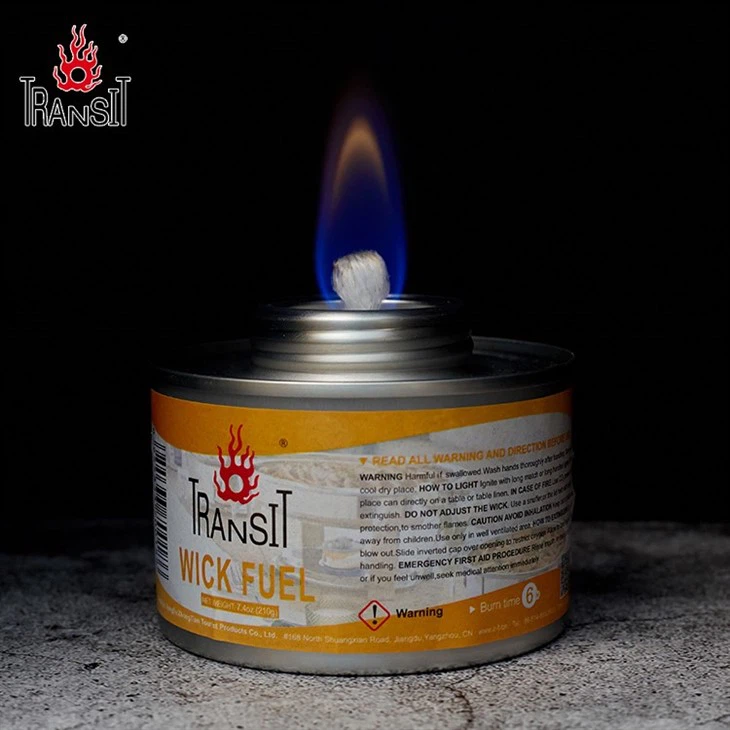
Our 6 Hour Chafing Fuel is designed to burn steadily at normal air pressures. But when the air pressure drops, the fuel may start to boil at a lower temperature than usual. This can cause the fuel to vaporize more quickly, which might lead to a faster burn rate. In some cases, the flame could become larger and more intense than it would at sea level. However, this also means that the fuel might not last the full six hours as advertised. The faster vaporization can consume the fuel more rapidly, shortening its burn time.
Reduced Oxygen Levels
Oxygen is essential for combustion. Without enough oxygen, the fuel won't burn properly. At high altitudes, the oxygen levels are thinner. This means that there's less oxygen available for the fuel to react with during the burning process.
When there's not enough oxygen, the combustion of our 6 Hour Chafing Fuel becomes incomplete. Incomplete combustion can result in a few different issues. One of the most noticeable is a sooty flame. You might see a lot of black smoke coming from the burner, which is a sign that the fuel isn't burning cleanly. This can also leave behind a residue on the chafing dish and the surrounding area.
Another problem with incomplete combustion is that it can reduce the heat output. The flame might be weaker, and it won't be able to keep the food as hot as it would at sea level. So, if you're using our fuel to keep food warm in a high - altitude location, you might find that the food cools down faster than expected.
Our Solutions
As a supplier, we're always looking for ways to make our products work well in different conditions. For high - altitude areas, we've done some testing to see how we can optimize the performance of our 6 Hour Chafing Fuel.
One thing we've found is that using a wick with larger pores can help. A wick with bigger pores allows more fuel to reach the flame, compensating for the faster vaporization caused by lower air pressure. It also helps to draw in more air, which can improve the oxygen supply to the flame and reduce the chances of incomplete combustion.
We're also considering developing a special formula for high - altitude use. This formula would be adjusted to take into account the lower air pressure and oxygen levels. It would be designed to burn more steadily and for the full six hours, even in high - altitude conditions.
Comparing with Other Chafing Fuels
We have other types of chafing fuels in our product line, like Diethylene Glycol Chafing Fuel and Handy Wick Chafing Fuel. These fuels also have their own characteristics when it comes to high - altitude performance.
The Diethylene Glycol Chafing Fuel has a different chemical composition compared to our 6 Hour Chafing Fuel. It might have a different boiling point and combustion properties. In high - altitude areas, it could behave differently in terms of burn rate and flame intensity. Some users have reported that it burns a bit more steadily in lower oxygen conditions, but it also has its own limitations.
The Handy Wick Chafing Fuel, on the other hand, has a unique wick design. The wick is designed to draw the fuel up and provide a consistent burn. In high - altitude areas, the wick can help to regulate the fuel flow and improve the oxygen supply to the flame. However, like our 6 Hour Chafing Fuel, it can still be affected by the lower air pressure and reduced oxygen levels.
Real - World Experiences
I've heard from some of our customers who have used our 6 Hour Chafing Fuel 12 Pack in high - altitude areas. One customer who was hosting an event in a mountain town said that the fuel burned faster than expected. They noticed that the flame was larger and more intense, and the food started to dry out a bit because of the increased heat. Another customer reported that they had a lot of sooty smoke coming from the burners, which was a hassle to clean up.
But not all experiences have been negative. Some customers have found that by adjusting the burner settings and using a larger - pore wick, they were able to get a more satisfactory performance. They were able to keep the food warm for a decent amount of time, and the flame was more stable.
Tips for Using 6 Hour Chafing Fuel in High - Altitude Areas
If you're planning to use our 6 Hour Chafing Fuel in a high - altitude area, here are some tips that might help you get the best results:
- Adjust the burner: You may need to turn down the burner a bit to control the flame size. This can help prevent the fuel from burning too quickly and reduce the risk of overheating the food.
- Use a larger - pore wick: As mentioned earlier, a wick with larger pores can improve the fuel flow and oxygen supply to the flame. This can lead to a more efficient and cleaner burn.
- Monitor the flame: Keep an eye on the flame while it's burning. If you notice that it's too large, sooty, or not providing enough heat, make the necessary adjustments.
- Have extra fuel on hand: Since the burn time might be shorter in high - altitude areas, it's a good idea to have some extra fuel available in case you need to refill the burners.
Conclusion
In conclusion, our 6 Hour Chafing Fuel can be affected by the lower air pressure and reduced oxygen levels in high - altitude areas. However, with some adjustments and proper use, you can still get a decent performance out of it. We're committed to improving our products and finding better solutions for high - altitude use.
If you're interested in purchasing our 6 Hour Chafing Fuel or any of our other products, we'd love to hear from you. Whether you're planning an event at sea level or in a high - altitude location, we can provide you with the right fuel for your needs. Just reach out to us for more information and to start a procurement discussion.
References
- "Combustion Science and Engineering" by Richard Strehlow
- "High - Altitude Effects on Combustion Processes" - Journal of High - Altitude Research