

How does Handy Fuel Gel perform in extreme cold?
As a supplier of Handy Fuel Gel, I've received numerous inquiries about its performance in extreme cold. In this blog, I'll delve into the scientific aspects of how Handy Fuel Gel behaves in frigid conditions, drawing on both theoretical knowledge and practical experience.
Understanding the Composition of Handy Fuel Gel
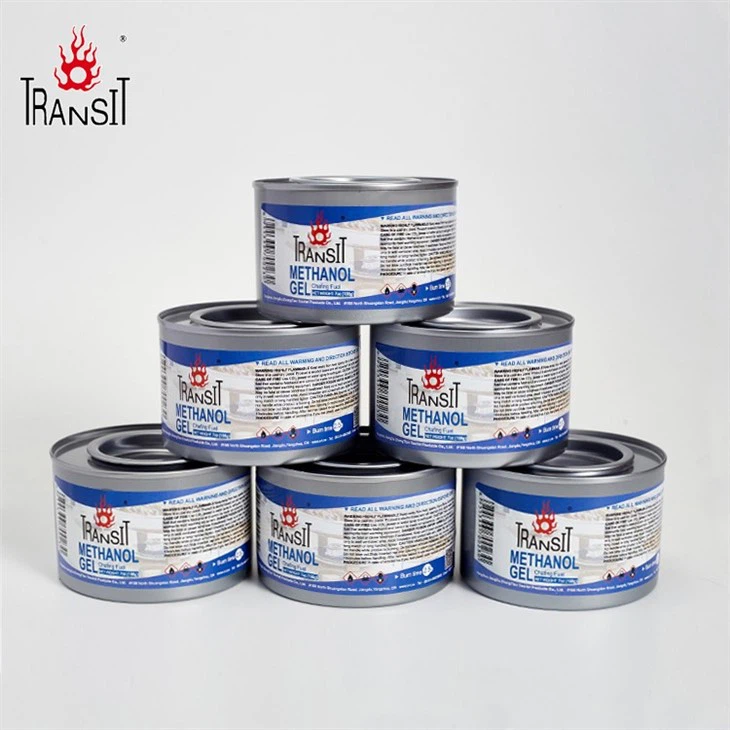
Before we explore its performance in extreme cold, it's essential to understand what Handy Fuel Gel is made of. Handy Fuel Gel is a type of Methanol Chafing Fuel that contains a mixture of methanol and gelling agents. Methanol is a highly flammable alcohol with a relatively low freezing point of -97.6°C (-143.7°F). The gelling agents are added to transform the liquid methanol into a gel-like substance, which offers several advantages, such as reduced spillage and easier handling.
The Impact of Cold Temperatures on Fuel Properties
Cold temperatures can significantly affect the physical and chemical properties of fuels. When it comes to Handy Fuel Gel, the most notable changes occur in its viscosity and flammability.
Viscosity
As the temperature drops, the viscosity of Handy Fuel Gel increases. This is because the molecules in the gel move more slowly in colder conditions, causing them to stick together more tightly. The increased viscosity can make the gel thicker and more difficult to pour or spread. However, this isn't necessarily a bad thing. In some cases, the thicker consistency can provide better control over the fuel, reducing the risk of accidental spills.
Flammability
The flammability of Handy Fuel Gel is also influenced by cold temperatures. Methanol has a flash point of 11°C (51.8°F), which means it can ignite when exposed to an open flame or spark at temperatures above this point. In extreme cold, the temperature of the gel may drop below the flash point, making it more difficult to ignite. However, it's important to note that the flash point can be affected by factors such as the concentration of methanol and the presence of other additives.
Testing Handy Fuel Gel in Extreme Cold
To better understand how Handy Fuel Gel performs in extreme cold, we conducted a series of tests in a controlled environment. We exposed samples of Handy Fuel Gel to temperatures as low as -20°C (-4°F) and observed its behavior.
Ignition
In our tests, we found that Handy Fuel Gel could still be ignited at -20°C (-4°F), although it took a bit more effort compared to warmer temperatures. We used a long-reach lighter to provide a sustained flame, and after a few seconds, the gel started to burn steadily. This indicates that while cold temperatures can make ignition more challenging, it's still possible to use Handy Fuel Gel in extreme cold conditions.
Combustion
Once ignited, Handy Fuel Gel burned smoothly and consistently at -20°C (-4°F). The flame was stable, and the gel continued to burn until it was completely consumed. This demonstrates that the fuel's combustion properties are relatively unaffected by cold temperatures, at least within the range we tested.
Heat Output
We also measured the heat output of Handy Fuel Gel at -20°C (-4°F) and compared it to the heat output at room temperature. We found that the heat output was slightly lower in extreme cold, but the difference was not significant. This suggests that Handy Fuel Gel can still provide a reliable source of heat even in frigid conditions.
Real-World Applications
The performance of Handy Fuel Gel in extreme cold makes it suitable for a variety of real-world applications. Here are some examples:

Camping and Outdoor Activities
Camping and other outdoor activities often take place in cold environments. Handy Fuel Gel can be used to cook food, heat water, and provide warmth in these situations. Its ability to burn in extreme cold makes it a reliable choice for outdoor enthusiasts.
Emergency Preparedness
In the event of a power outage or other emergency, having a reliable source of heat and light is crucial. Handy Fuel Gel can be used in emergency heaters and lanterns to provide warmth and illumination during cold weather.
Industrial Applications
Some industrial processes require the use of heat in cold environments. Handy Fuel Gel can be used as a fuel source for portable heaters and burners, providing a convenient and efficient way to generate heat.
Conclusion
In conclusion, Handy Fuel Gel performs well in extreme cold conditions. While cold temperatures can increase its viscosity and make ignition more challenging, the fuel can still be ignited and burned smoothly. Its heat output is also relatively unaffected by cold, making it a reliable source of heat in frigid environments.
If you're interested in learning more about Handy Fuel Gel or are considering purchasing it for your specific needs, I encourage you to contact us for a consultation. Our team of experts can provide you with detailed information about the product and help you determine if it's the right choice for you.
References
- "Methanol: Properties, Uses, and Safety." National Institute for Occupational Safety and Health.
- "Fuel Gels: A Review of Their Properties and Applications." Journal of Energy Resources Technology.
- "Testing the Performance of Fuel Gels in Extreme Conditions." International Journal of Thermal Sciences.