

How to check the quality of liquid chafing fuel?
As a supplier of liquid chafing fuel, I understand the importance of ensuring the quality of our products. Liquid chafing fuel is widely used in the food service industry to keep food warm during buffets, catering events, and other occasions. Therefore, it is crucial to provide customers with a high - quality product that is safe, efficient, and long - lasting. In this blog, I will share some key methods on how to check the quality of liquid chafing fuel.
1. Visual Inspection
The first step in checking the quality of liquid chafing fuel is a simple visual inspection. A high - quality liquid chafing fuel should be clear and free of any visible impurities. Cloudy or murky fuel may indicate the presence of contaminants, such as dirt, water, or other foreign substances. These impurities can not only affect the performance of the fuel but also pose a safety hazard.
When you pour the fuel into a clean, transparent container, it should have a consistent color. Any discoloration, such as a yellowish or brownish tint, could be a sign of oxidation or degradation. Oxidized fuel may burn less efficiently and produce more smoke and odor. For example, if you notice that the fuel has a dark color, it might have been exposed to air for too long or stored in improper conditions.
2. Smell Test
The smell of the liquid chafing fuel can also provide valuable clues about its quality. A good - quality liquid chafing fuel should have a relatively mild and clean smell. If the fuel has a strong, pungent, or unpleasant odor, it could be a sign of low - quality ingredients or contamination.
Some low - grade fuels may contain high levels of volatile organic compounds (VOCs), which can produce a strong, chemical - like smell. These VOCs not only create an unpleasant environment but can also be harmful to human health, especially when used in enclosed spaces. On the other hand, a well - formulated liquid chafing fuel should have a smell that is barely noticeable when not burning. When the fuel is lit, it should burn with a clean smell, without any foul or acrid odors.

3. Combustion Performance
One of the most important aspects of liquid chafing fuel quality is its combustion performance. This can be evaluated in several ways.
Burn Time
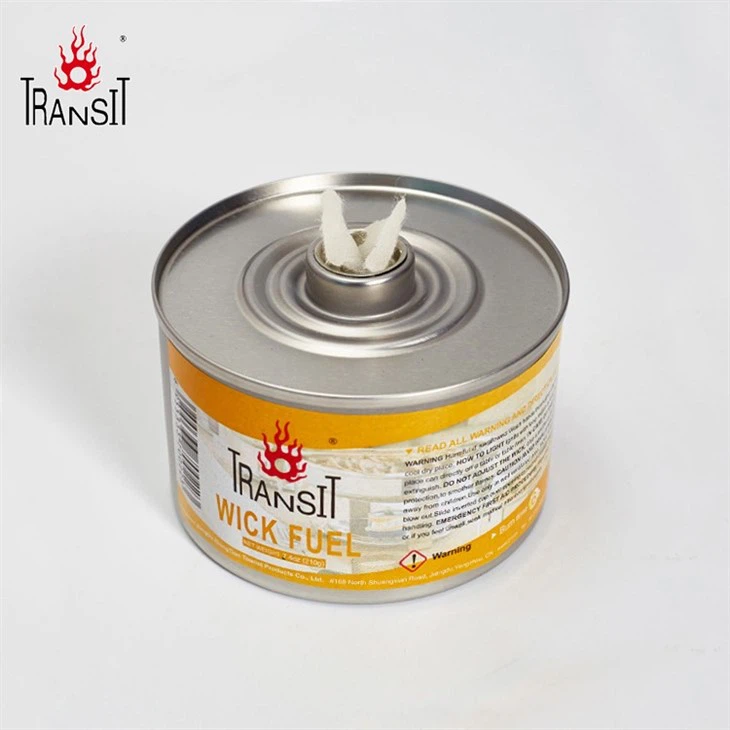
The burn time of the fuel is a critical factor. Different products are designed for different durations. For instance, our 4 Hour Chafing Fuel and 6 Hour Chafing Fuel are formulated to provide a consistent heat source for the specified periods. To test the burn time, you can use a controlled environment, such as a chafing dish set up in a laboratory or a test kitchen. Measure the time from when the fuel is lit until it burns out completely. A high - quality fuel should meet or exceed its advertised burn time. If the fuel burns out much earlier than expected, it may not be suitable for its intended use, especially in long - duration events.
Heat Output
The heat output of the fuel is another important parameter. You can use a thermometer to measure the temperature of the chafing dish or the food being kept warm. A good - quality liquid chafing fuel should be able to maintain a stable and appropriate temperature. For example, in a standard chafing dish setup, the fuel should be able to keep the food at a safe serving temperature (usually around 140°F or 60°C) for the entire burn time. If the temperature drops significantly or fluctuates during the burn, it could indicate poor combustion efficiency.
Flame Quality
The appearance of the flame can also tell you a lot about the fuel quality. A high - quality liquid chafing fuel should produce a clean, blue - colored flame. A yellow or orange flame may indicate incomplete combustion, which can lead to the production of soot and carbon monoxide. Soot can dirty the chafing dish and surrounding areas, while carbon monoxide is a toxic gas. In addition, the flame should be steady and not flicker excessively. Flickering flames may be a sign of air bubbles in the fuel or improper ventilation, but it can also be due to low - quality fuel.
4. Safety Testing
Safety is of utmost importance when it comes to liquid chafing fuel. There are several safety - related aspects to consider during quality checking.
Flash Point
The flash point of the fuel is the lowest temperature at which it can form a flammable vapor in the air. A high - quality liquid chafing fuel should have a relatively high flash point to reduce the risk of accidental ignition. You can use a flash point tester to determine the flash point of the fuel. A higher flash point means that the fuel is less likely to ignite spontaneously, making it safer to handle and store.
Spill and Leak Resistance
The container of the liquid chafing fuel should be designed to prevent spills and leaks. A well - made container should have a tight - fitting cap or lid to prevent the fuel from leaking during transportation and storage. You can perform a simple test by gently shaking the container to see if there are any signs of leakage. Additionally, the container should be made of a durable material that can withstand normal handling and potential impacts without breaking or cracking.
5. Shelf Life
The shelf life of the liquid chafing fuel is also an important factor in determining its quality. A high - quality fuel should have a reasonable shelf life, which means it can maintain its performance and safety characteristics over a certain period.
Proper storage conditions can significantly affect the shelf life of the fuel. The fuel should be stored in a cool, dry place away from direct sunlight and heat sources. Exposure to high temperatures and sunlight can cause the fuel to degrade more quickly, reducing its burn time and combustion efficiency. You can check the expiration date on the container, and it is also a good idea to perform periodic quality checks on stored fuel to ensure that it is still in good condition.
6. Compatibility with Chafing Dishes
The liquid chafing fuel should be compatible with different types of chafing dishes. Some fuels may react with certain materials used in chafing dishes, causing corrosion or other damage.
Before using a new batch of fuel, it is advisable to test it with a small - scale chafing dish setup. Observe if there are any signs of corrosion on the dish, such as rust or discoloration. Also, make sure that the fuel burns evenly and efficiently in the specific chafing dish you plan to use. Different chafing dishes may have different burner designs, and the fuel should be able to work well with all of them.
Conclusion
Checking the quality of liquid chafing fuel is a multi - faceted process that involves visual inspection, smell testing, evaluating combustion performance, safety testing, considering shelf life, and ensuring compatibility with chafing dishes. As a supplier, we are committed to providing high - quality products that meet all these standards. Our 4 Hour Chafing Fuel, 6 Hour Chafing Fuel, and 6 Hour Chafing Fuel 12 Pack are carefully formulated and tested to ensure optimal performance and safety.
If you are in the market for high - quality liquid chafing fuel, we invite you to contact us for more information and to discuss your procurement needs. We are dedicated to providing excellent customer service and products that meet your requirements.
References
- ASTM International. (20XX). Standard test methods for various properties of liquid fuels.
- National Fire Protection Association. (20XX). Fire safety standards for flammable and combustible liquids.