

What is the specific gravity of alcohol gel fuel?
What is the Specific Gravity of Alcohol Gel Fuel?
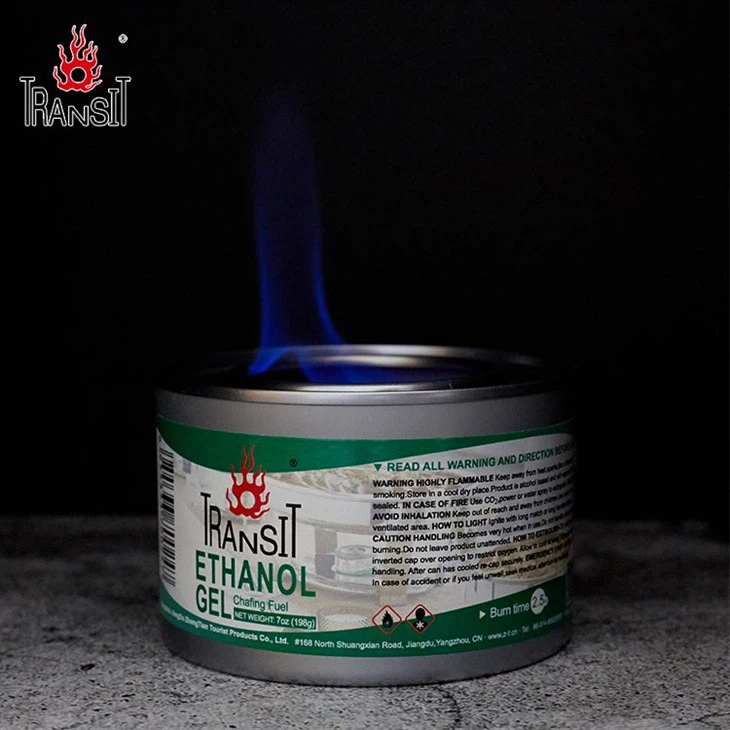
As a supplier of alcohol gel fuel, I often get asked about various technical aspects of our product, and one question that comes up quite frequently is about the specific gravity of alcohol gel fuel. In this blog post, I'll delve into what specific gravity is, why it matters for alcohol gel fuel, and how it can impact its performance.
Understanding Specific Gravity
Specific gravity is a measure of the density of a substance compared to the density of a reference substance, usually water at a specified temperature (typically 4°C, where the density of water is 1 g/cm³). It is a dimensionless quantity because it is a ratio of two densities. For example, if a substance has a specific gravity of 0.8, it means that it is 0.8 times as dense as water.
The formula for specific gravity (SG) is:
[SG=\frac{\rho_{substance}}{\rho_{water}}]
where (\rho_{substance}) is the density of the substance in question and (\rho_{water}) is the density of water.
Specific Gravity of Alcohol Gel Fuel
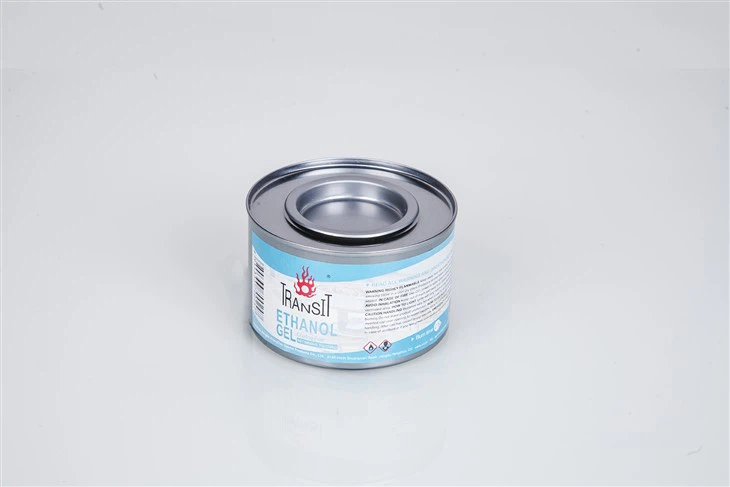
Alcohol gel fuel is a mixture of alcohol (usually ethanol) and a gelling agent. The specific gravity of alcohol gel fuel can vary depending on several factors, including the type and concentration of alcohol used, the type and amount of gelling agent, and any additives present in the fuel.
Ethanol, the most common alcohol used in alcohol gel fuel, has a density of approximately 0.789 g/cm³ at 20°C. This means that pure ethanol has a specific gravity of about 0.789 relative to water at 4°C. However, when a gelling agent is added to the ethanol to form a gel, the density of the mixture increases.
The gelling agent thickens the alcohol, making it more viscous and changing its physical properties. The specific gravity of alcohol gel fuel typically ranges from around 0.85 to 0.95. This is higher than the specific gravity of pure ethanol because the gelling agent adds mass to the mixture without significantly increasing its volume.
Why Specific Gravity Matters
The specific gravity of alcohol gel fuel is an important parameter for several reasons:
- Combustion Performance: The specific gravity can affect the combustion characteristics of the fuel. A fuel with a higher specific gravity may burn more slowly and steadily compared to a fuel with a lower specific gravity. This can be beneficial for applications where a long - lasting and consistent flame is required, such as in catering or decorative fireplaces.
- Storage and Handling: Specific gravity can also impact the storage and handling of the fuel. Fuels with a higher specific gravity are generally more stable and less likely to spill or leak compared to fuels with a lower specific gravity. This is important for safety reasons, especially during transportation and storage.
- Quality Control: Measuring the specific gravity of alcohol gel fuel is an important part of quality control. By ensuring that the specific gravity of the fuel falls within a certain range, we can guarantee that the product meets our customers' expectations in terms of performance and safety.
Measuring Specific Gravity
There are several methods for measuring the specific gravity of alcohol gel fuel. One of the most common methods is to use a hydrometer. A hydrometer is a simple instrument that consists of a weighted glass tube with a scale on it. When placed in a liquid, the hydrometer floats, and the level at which it floats indicates the specific gravity of the liquid.
To measure the specific gravity of alcohol gel fuel using a hydrometer, a sample of the fuel is placed in a graduated cylinder, and the hydrometer is carefully lowered into the fuel. The reading on the hydrometer at the surface of the fuel gives the specific gravity.
Another method for measuring specific gravity is to use a digital density meter. A digital density meter uses a vibrating U - tube to measure the density of the sample, and the specific gravity can be calculated based on the measured density and the density of water.
Impact of Specific Gravity on Product Applications
Different applications of alcohol gel fuel may require different specific gravities.
Catering Fuel Gel: In the catering industry, Catering Fuel Gel is used to keep food warm. A fuel with a relatively high specific gravity is preferred because it burns more slowly and provides a consistent heat source. This ensures that the food remains at the desired temperature for an extended period without the need for frequent refueling.
Bio Gel Fuel: Bio Gel Fuel is often used in decorative fireplaces and outdoor heating applications. The specific gravity of bio gel fuel can be adjusted to achieve different flame characteristics. A fuel with a lower specific gravity may produce a more vibrant and flickering flame, while a fuel with a higher specific gravity may provide a more stable and subdued flame.
Bioethanol Fire Gel: Bioethanol Fire Gel is used in indoor and outdoor fireplaces for decorative purposes. The specific gravity of bioethanol fire gel is carefully controlled to ensure a safe and efficient combustion process. A proper specific gravity helps to prevent excessive smoke and odor, and it also ensures that the flame is visible and aesthetically pleasing.
Factors Affecting Specific Gravity Variation
As mentioned earlier, the specific gravity of alcohol gel fuel can vary due to several factors. The type of gelling agent used is a significant factor. Different gelling agents have different densities and viscosities, which can affect the overall density of the fuel. For example, some gelling agents may be more dense than others, leading to a higher specific gravity in the final product.
The concentration of the gelling agent also plays a role. A higher concentration of gelling agent will generally result in a higher specific gravity because more mass is added to the mixture. However, there is a limit to how much gelling agent can be added, as too much can make the fuel too thick and difficult to ignite.
Additives such as colorants, fragrances, and flame retardants can also affect the specific gravity of alcohol gel fuel. These additives can add mass to the mixture, increasing its density and thus its specific gravity.
Ensuring Consistent Specific Gravity
As a supplier, we take several steps to ensure that the specific gravity of our alcohol gel fuel is consistent from batch to batch. We carefully control the raw materials used in the production process, including the type and quality of alcohol, gelling agent, and additives.
We also have a strict quality control system in place. Every batch of alcohol gel fuel is tested for specific gravity using calibrated hydrometers and digital density meters. If the specific gravity of a batch falls outside the acceptable range, we adjust the formulation to bring it back within the desired limits.
Conclusion
The specific gravity of alcohol gel fuel is an important parameter that affects its combustion performance, storage, handling, and overall quality. As a supplier, we understand the significance of maintaining a consistent specific gravity in our products. Whether you are in the catering industry, looking for a bio gel fuel for your decorative fireplace, or need a bioethanol fire gel for your indoor or outdoor fire feature, we can provide you with high - quality alcohol gel fuel with the right specific gravity for your needs.
If you are interested in purchasing our alcohol gel fuel or have any questions about our products, please feel free to contact us. We are always happy to discuss your requirements and provide you with more information.
References
- Handbook of Chemistry and Physics, CRC Press
- ASTM International standards related to fuel testing and properties.