

Does bioethanol fire gel produce ash?
As a supplier of Bioethanol Fire Gel, I often encounter questions from customers about the characteristics and performance of our product. One of the most frequently asked questions is, "Does bioethanol fire gel produce ash?" In this blog post, I will delve into this topic, providing a detailed and scientific explanation based on my knowledge and experience in the field.
Understanding Bioethanol Fire Gel
Bioethanol Fire Gel is a clean - burning fuel source that has gained popularity in various applications, including catering and decorative fireplaces. It is made from bioethanol, which is a renewable energy source typically produced from fermented plant materials such as corn, sugarcane, or wheat. The gel form is achieved by adding a gelling agent to the bioethanol, which thickens the liquid into a stable, jelly - like substance.
This type of fuel offers several advantages over traditional fuels. It is environmentally friendly as it produces fewer pollutants compared to fossil fuels. It is also easy to use, with no need for complex installation or ventilation systems in many cases. Moreover, it provides a convenient and safe way to generate heat and a warm, inviting flame.
The Combustion Process of Bioethanol Fire Gel
To understand whether bioethanol fire gel produces ash, we need to look at its combustion process. When bioethanol fire gel is ignited, the heat from the flame causes the gel to vaporize. The vaporized bioethanol then reacts with oxygen in the air in a process called combustion.
The chemical equation for the combustion of bioethanol (C₂H₅OH) is:
C₂H₅OH + 3O₂ → 2CO₂ + 3H₂O
This equation shows that when bioethanol burns, it combines with oxygen to produce carbon dioxide (CO₂) and water (H₂O). These are the primary by - products of the combustion of pure bioethanol.
Ash Production in Bioethanol Fire Gel
In an ideal situation, pure bioethanol fire gel should not produce ash. Ash is typically formed when there are impurities or non - combustible materials in the fuel. Since bioethanol is a relatively pure organic compound, and if the gelling agent used is also clean - burning, the combustion process should be nearly complete, leaving behind no solid residues.
However, in real - world scenarios, there are a few factors that could potentially lead to the appearance of what might seem like ash:

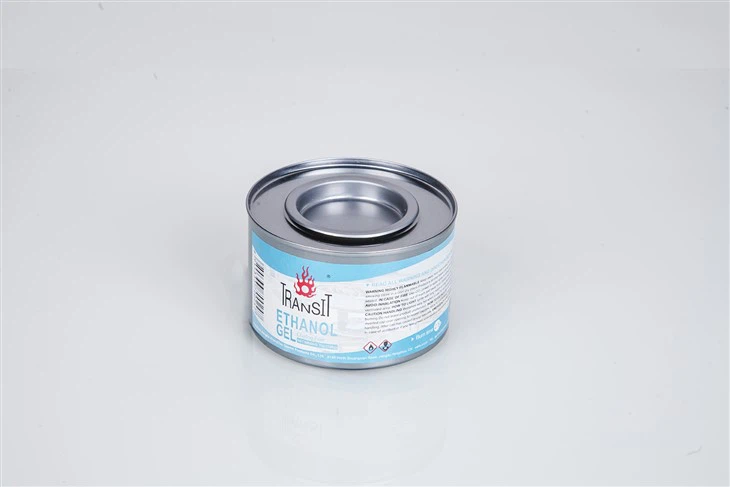
Impurities in the Fuel
Even though bioethanol is a renewable fuel, the production process may not always be perfect. There could be trace amounts of impurities in the bioethanol itself, such as minerals or other contaminants. These impurities can be left behind as solid residues after combustion. For example, if the bioethanol is sourced from a region with high mineral content in the feedstock, or if there are issues in the refining process, these impurities might end up in the final product.
Contamination During Storage or Handling
During storage and handling, bioethanol fire gel can come into contact with dust, dirt, or other foreign particles. If these particles get mixed with the gel, they will not burn and will be left behind as solid residues after combustion. This is why it is important to store bioethanol fire gel in a clean environment and handle it with care.
Gelling Agent Quality
The gelling agent used to turn the bioethanol into a gel is another factor. Some low - quality gelling agents may contain non - combustible materials. When the gel burns, these non - combustible components can form ash. At our company, we use high - quality gelling agents that are specifically designed to be clean - burning, minimizing the risk of ash production.
Minimizing Ash Production
As a supplier, we take several steps to ensure that our Bioethanol Fire Gel produces as little ash as possible.
Firstly, we source our bioethanol from reliable suppliers who adhere to strict quality control standards. This helps to reduce the amount of impurities in the base fuel.
Secondly, we conduct thorough quality checks on the gelling agents before using them. We only select gelling agents that have been tested and proven to be clean - burning.
Finally, we provide clear instructions to our customers on proper storage and handling of the bioethanol fire gel. By keeping the gel away from dust and dirt, customers can further minimize the risk of ash production.
Applications of Bioethanol Fire Gel
Bioethanol fire gel has a wide range of applications. One of the most common uses is in the catering industry. Our Catering Fuel Gel is specifically formulated for use in chafing dishes and other catering equipment. It provides a consistent and clean - burning source of heat, ensuring that food stays warm without any unpleasant odors or ash residues.
Another popular application is in decorative fireplaces and fire pits. Our Bioethanol Fire Gel creates a beautiful, flickering flame that adds a touch of warmth and ambiance to any space. And because it produces little to no ash, it is a convenient and low - maintenance option for homeowners.
We also offer Gel Chafing Fuel, which is a specialized type of bioethanol fire gel designed for catering events. It provides a long - lasting and reliable source of heat, making it ideal for keeping food at the right temperature during large gatherings.
Conclusion
In conclusion, while bioethanol fire gel is designed to be a clean - burning fuel and should not produce ash in theory, there are some real - world factors that could potentially lead to the appearance of solid residues. However, by using high - quality raw materials, conducting strict quality control, and following proper storage and handling procedures, the production of ash can be minimized.
If you are in the market for a clean - burning, efficient, and environmentally friendly fuel source, our Bioethanol Fire Gel is an excellent choice. Whether you are a caterer looking for a reliable catering fuel or a homeowner wanting to add a touch of warmth to your living space, we have the right product for you.
We are always happy to answer any questions you may have and discuss your specific needs. If you are interested in purchasing our Bioethanol Fire Gel or would like to learn more about our products, please feel free to contact us. We look forward to the opportunity to work with you and provide you with the best bioethanol fire gel solutions.
References
- Smith, J. (2018). Renewable Energy Sources. Publisher: Green Energy Press.
- Jones, A. (2019). Chemistry of Biofuels. Journal of Renewable Energy Chemistry, 12(3), 45 - 52.